Proving the Case for Cycles: Why Technical Analysts Should Pay More Attention
There are certain areas of technical analysis that traders either fully embrace or quietly avoid. Cycle analysis probably sits near the top of that list. For many analysts, cycles can feel too theoretical or simply too much to add to an already crowded toolkit.
But after listening to Tom Bundgaard speak about cycle analysis, it becomes much harder to dismiss. His webinar, Proving the Case for Cycles, was not just another discussion about theory. It was an attempt to answer the question every analyst should ask: does it actually work? And importantly he revisited old forecasts publicly and measured them against reality.
Why Cycles Matter
One of the strongest points Tom made was that cycles are not about perfection. They are about probability, structure and timing. He explained that the role of cycles is not to predict every tick, but to identify the likely direction of travel and the approximate duration of moves.
In the webinar, he revisited a sugar market forecast originally presented in 2021. The forecast stretched all the way toward 2030 and mapped out major turning points using cycle analysis.
The forecast was not flawless, but the broader structure worked remarkably well. The market broadly declined, rallied and corrected where the cycles suggested it should. Over a five-year period, the roadmap proved highly usable.
Cycles Plus Technical Analysis
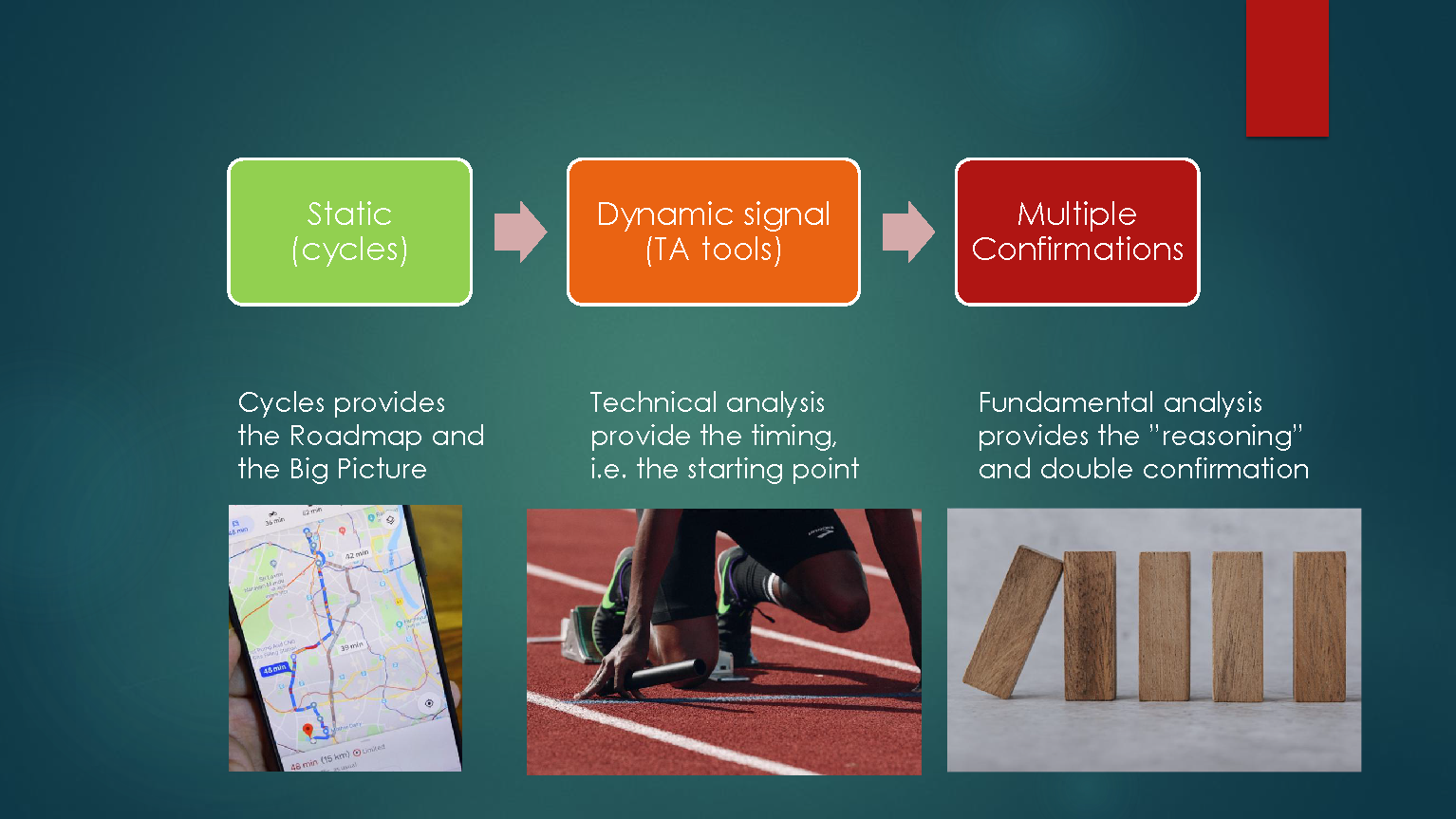
One of the most interesting parts of the webinar was Tom’s distinction between static and dynamic analysis. Cycles provide the roadmap. Traditional technical indicators provide the trigger.
Tom showed how cycles become far more powerful when combined with RSI, moving averages and MACD. If cycles suggest a peak is forming, traders can then look for momentum extremes or moving average breaks for confirmation. That combination is where cycle analysis becomes genuinely actionable.
The Biggest Misunderstanding About Cycles
Many traders assume cycle analysis is vague or subjective. Tom challenged that directly. He demonstrated how cycle analysis software mathematically calculates cycles using tools such as Fourier and Bartels analysis, while stressing that automated results are only the starting point. Proper cycle work still requires experience, refinement and judgement.
That should probably reassure traders rather than concern them.
Cycles and Commodity Forecasting
Tom has spent more than two decades specialising in commodity forecasting from both a technical and fundamental perspective. One particularly interesting part of the webinar focused on hedging strategies. Tom explained how cycles can help companies decide not only whether to hedge, but how long those hedges should remain in place. This is not just about speculative trading. It is about real businesses managing real price risk.
Why Confirmation Matters
Perhaps the most valuable takeaway from the session was Tom’s emphasis on combining disciplines. Cycles matter, momentum matters and trend analysis matters. But so do macroeconomics and fundamentals.
During the webinar, he showed how inflation trends could be combined with technical cycle analysis when looking at Treasury bills. The message was clear: the best forecasts rarely come from a single tool. They come from alignment.
When cycles, momentum, trend structure and macro fundamentals all point in the same direction, the probability of a meaningful move increase.
Should Traders Learn Cycle Analysis?
Probably yes. Not because cycles are magical, and not because they replace other forms of technical analysis, but because they add something many traders lack: time structure.
Most traders are reasonably good at identifying trend. Far fewer can assess when a move is likely to unfold. That is where cycle analysis becomes extremely useful.
After this webinar, it is difficult not to conclude that cycles deserve a place on that shortlist. Especially when someone is willing to revisit a five-year-old forecast publicly and show that, while imperfect, it broadly worked. That is evidence worth paying attention to.
By Karen Jones FSTA Professional Technical Analyst and Content Creator for the STA
Karen Jones LinkedIn profile linkedin.com/in/karen-jones-fsta-a2907b9
#BusinessCycleAnalysis #FundamentalAnalysis #CommodityPriceForecasting #MarketOutlook #InvestingStrategy #Gold #Commodities #StockMarket #MacroEconomics #FinancialReset #RecessionWatch #Inflation #WealthBuilding #EconomicCycles #Trading #GlobalMarkets #InvestmentInsights